M&A toast with Italian Wine during Covid crisis

The first half of 2021 has been characterized by a very intense Mergers & Acquisitions activity on Italian wine scene. Among the largest transactions were those of Botter and MondodelVino which passed under the aegis of the Clessidra fund, Antinori which acquired the majority of Friuli brand Jermann, from Coppo, which joined the Dosio Group, in a transaction between Langhe and Monferrato and Italian Wine Brands, which incorporated Enoitalia by Renzo Rosso, owner of fashion firm Diesel, who, with his Red Circle Investment, rose to 7.5% (and joined the Board of Directors) in Masi Agricola, in Torrevento, formerly in the Prosit Group (fund controlled by Quadrivio & Pambianco), which acquired the majority of Oria Wine.

Each of these transactions was different from the others, because of the type of players involved (in some cases, large commercial and industrial companies, in others, financial investment companies, and still others leading brands focused on production, from the vineyard to the cellar, often selling the property, but remaining in the management of the company that bought it). However, they all recount a process of aggregation that has been underway for some time on the Italian panorama. Covid and complex future market scenarios have accelerated the process further. We will also see similar companies that do not have large tangible assets such as vineyards or wineries, but have a market and critical mass product, unifying. Or market leaders, seeking to diversify and integrate territories and offers, while maintaining a consistent positioning, and working, however, on shared values. This, to enhance company assets under all aspects: organizational, managerial, distribution, dimensional. Then, there are the Cooperatives, which must maintain their aspect of social impact on the territories, but that in order to grow will have to invest more and more in established brands as well, as Caviro did some time ago with Cesari, in Veneto: incorporating a brand that is already a territorial umbrella on the supply chain. We have been registering this trend towards aggregation for years, and it will characterize the coming years even more so. We must also pay attention to the integration between different agro-food chains. We will see more and more food companies also invest in wine, where there is the possibility of sharing and integrating target markets, distribution channels and similar values. Further, we must not forget investment funds, which are continuing to look to Italian wine. Great excitement is brewing, which will be good for this sector that has suffered, but is still performing, sustainable, has medium-long term returns, and represents community and local social business, which is not at all a secondary aspect”.

It seems that aggregation is irreversible. But is it good for consumers? Furthermore, growth of mass retail and e-commerce add complexity to post-pandemic market scenarios requiring more advanced management skills than in the past. Mass retail produced record sales during Covid crisis and now has the occasion to treasure customer service policy, and to become a serious competitor versus traditional wine distribution channels. Moreover, online sales, both for mass retail and specific platforms has relatively small numbers but will grow in the future leveraging on efficient service and logistics. Wine producers will have to adapt to this change. Mass retail will be more expensive to approach because it has raised the bar, in terms of product, but not just that. Many things are changing. It is a complex scenario to read for companies, because Italian Wine industry is made by many structured companies, as well as by many that not very well organized. Small producers, even in the 100-200.000 bottles quantity bracket, are interrogating themselves on the future, since they will have to deal with new distribution models, innovation, positioning errors made in the past, on the shelf and online, as identical bottles often have significant price differences from one retailer to another, and this is confusing. Furthermore, the distribution model, by now, is a worldwide reference because this is what allows online sales.

Up to now, we have been talking about “terroir” as the target for investment, but this, too, is changing. The focus, will be on the “best in class” companies within the terroirs. Those that have strong brands, are local, have often built the territorial brand as well as their own, and have found a place on the wine lists and the most famous wine bars in the world. In some terroirs, vineyards real estate prices have fuelled speculation, such as in the case of Barolo, Montalcino, or Bolgheri to name a few. Here it is difficult to invest “merely” in a vineyard. There are a few companies within each terroir that are also leaders of lesser known Regions or denominations. These companies may have no intention or need to sell, but if there is a possibility of growing, or perhaps even opening a minority stake in their capital, they will not hold back. Again, will all this be good news for the consumer? For the educated wine-lover? Is all this really positive progress? We will see… It certainly is very profitable now for financial advisors, bankers and investment consultants. Cheers to their wallets!
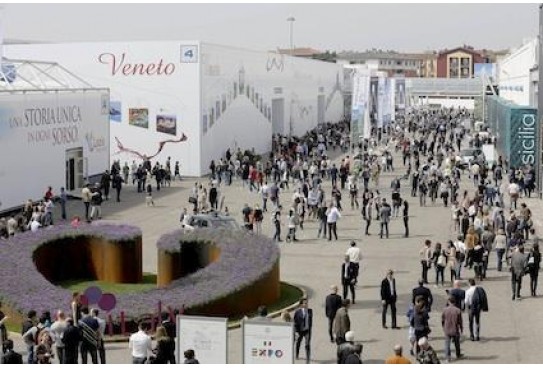
Veronafiere postpones again 54th Vinitaly, now scheduled 10-13 April 2022

OPERAWINE confirmed, for the moment, on 19 and 20 June 2021.

Unfortunately, Covid-19 pandemic forced organisers of one of the World’s most important wine exhibitions to cancel the event also for this year, following the first cancellation in 2020.  A desperate effort by Veronafiere to extend exhibitors’ attendance applications to Vinitaly until next April 12th was not enough to allow Vinitaly to take place in 2021.

Here below you can read Veronafiere’s official press release:

Veronafiere has decided to postpone the 54th Vinitaly – the international wines and spirits exhibition – now scheduled on 10-13 April 2022. “The ongoing uncertainties within the national and international scenario and the extended lockdowns have prompted us to reschedule the exhibition definitively to 2022,” said Maurizio Danese, President of Veronafiere S.p.A. It is a question of making an albeit painful choice of responsibility; yet another compulsory halt that deprives Italian wine of its landmark event for national and international promotion. While waiting for the scenario to become more favourable once again,” Danese concluded, “Vinitaly continues to work hand in hand with all exponents, including sector institutions, such as the Ministry of Agricultural Policies and ICE-Italian Trade Agency, as well as all associations and categories, to continue supporting the competitiveness of Italian wine both on the domestic market and other countries already on the way to recovery, with the USA, China and Russia in the forefront.”

Against this background, the CEO of Veronafiere, Giovanni Mantovani, added: “We confirm OperaWine attended by Wine Spectator and the top companies in the sector identified by the American magazine for the 10th anniversary of this event, which remains scheduled in Verona next 19-20 June. The event will focus on restarting the sector, thanks to the involvement of the trade press and national and international operators,” said Mantovani, “and will also act as a point of attraction and a driving force for all the wine companies keen to take part in a b2b calendar that Veronafiere is already preparing.”

Operawine will be preceded, again in June, by the Vinitaly Design international Packaging Competition (11 June) and Vinitaly 5 Stars Wine The book (16-18 June). The Vinitaly international Academy (21-24 June) will close the attended events scheduled for the summer.

Innovations also include an exceptional promotional event with significant institutional input next October and which will guide the sector during the run-up to the 54th Vinitaly in 2022.  Giovanni Mantovani went on: “We are talking about Vinitaly – Special Edition, a strictly b2b event that will highlight the resumption of national and international business in Verona 16-18 October.”

“We want to keep attention on Italian wine alive all over the world as one of the most meaningful ambassadors of Made in Italy,” said the President of ICE-Italian Trade Agency, Carlo Ferro. The initiatives implemented by Veronafiere to keep the ball rolling between Vinitaly 2019 and 2022, with the Vinitaly Special Edition and other events we will develop together share this objective. This seamless approach was achieved despite the global pandemic and thanks also to the use of new tools in terms of digital commerce.  I send my best wishes to the entire Veronafiere team and wine producers in the belief that the events scheduled for 2021 will help support Italian wine-making excellence.”

While waiting for the resumption of attended events in Italy itself, Vinitaly continues its operations on international markets, starting off in Russia with stop-offs in Moscow and St. Petersburg scheduled from 23 to 25 March. It will be the turn of Vinitaly Chengdu 3-6 April and then Wine to Asia (Shenzhen, 8-10 June). And China will again open Vinitaly’s international calendar in the autumn (13-17 September) before moving on to Brazil for Wine South America (22-24 September).

Veronafiere also makes its know-how available to organise other promotional events in other target markets for the wine sector.

The decision to postpone Vinitaly was shared with organizations and associations in wine-making and agricultural sectors. There follow below, in alphabetical order, statements by: Alleanza delle Cooperative Italiane Agroalimentare, Assoenologi, Cia-Agricoltori Italiani, Coldiretti, Confagricoltura, Copagri, Federdoc, Federvini and Unione Italiana Vini (Uiv).

“We acknowledge the decision to postpone the 54th Vinitaly to 2022,” said the wine sector coordinator of Alleanza Cooperative Agroalimentari, Luca Rigotti. It was certainly not an easy decision to take but, in light of the current health situation, it is in line with what Alleanza delle Cooperative Italiane-Agroalimentare is hoping for. We also welcome the other promotional initiatives proposed by Veronafiere for coming months: we look forward to being able at last to enter a stage characterized by a higher level of safety and fewer uncertainties for the wine sector. These are also necessary conditions if we are to relaunch – thanks to the experience and expertise of Veronafiere – the wine sector on an international scale.”

The President of Assoenologi, Riccardo Cotarella, commented: “The decision taken by Veronafiere to postpone the 54th Vinitaly to 2022 follows the direction suggested by the wine supply chain. Yet, above all, it takes into account the on-going situation of serious difficulty generated by the pandemic emergency, for which vaccination has not yet found a decisive answer. It is a choice of responsibility that we share in the broadest terms. We are equally ready to support the other initiatives announced by Veronafiere and scheduled for next June and later in October. The world of wine simply has to be ready for the when markets restart and therefore it is vital to keep attention high even through events capable of stimulating national and international relationships and interest in our sector. Yet the support that the Italian government and Europe will be able to implement to sustain the entire agro-food sector will be even more important: after more than a year of pandemic, this field is feeling the impact of the crisis just like other sectors in the Italian economy.”

“We team up with Veronafiere to continue supporting the sector with all the companies and producers who help every day to ensure that wine in one of the products of Italian excellence acknowledged all over the world,” said the National President of Cia-Agricoltori Italiani, Dino Scanavino. The pandemic is still a very serious matter and has forced a further postponement of attended events – but we are ready to work together with Vinitaly, in these difficult times, to support a vital field in the agro-food sector with production worth around 12 billion euros and an incomparable reputation.”

“Postponing Vinitaly is a necessary decision to allow attendance by international operators and support the success of the most exported Made in Italy agro-food product worldwide which, despite the pandemic, achieved turnover of 6.3 billion euros in 2020,” said the President of Coldiretti, Ettore Prandini, in highlighting the importance of the programme of upcoming Veronafiere events starting with OperaWine.

“The decision of Veronafiere, although a painful one, goes in the right direction,” said the President Confagricoltura, Massimiliano Giansanti. We especially appreciate the capacity for resilience and range of proposals put forward in such an extremely difficult time for the wine sector. Confagricoltura fully supports Veronafiere and the entire national agro-food trade fair sector. We are convinced that it is vital to support the validity of the Italian system and avoid perilous openings to other international realities. We also believe the Veronafiere, with its activities and Vinitaly, is a hugely valid promotional and image tool for the entire Italian wine sector. We therefore hope to restart at full swing again in 2022 by giving far-reaching emphasis to the initiatives scheduled as of today through to the next edition of Vinitaly, together with our companies that help make the Italy of wine so great worldwide.”

“The announcement of the postponement is a huge disappointment but the reality of the pandemic leaves no room for alternatives: it would be difficult for us to plan trips and contacts, we would encounter difficulties in welcoming guests to our stands,” said Sandro Boscaini, President of Federvini, “yet the second postponement widens the void left by Vinitaly not taking place. We need international contacts, we need to present our products and keep in touch with the enormous number of national and international operators who flocked to Verona in the past. We are sure that Vinitaly’s experience and expertise, with the help of ICE Italian Trade Agency, will be of great help to our companies, with formulas and proposals we can study quickly together.”

“I can only emphasize our regret in having to miss out on Vinitaly again this year, the main reference event for the Italian wine sector,” said the President of Federdoc, Riccardo Ricci Curbastro. A show so full of events, reviews, tastings and workshops to promote meetings between exhibitors and national and international operators in the sector which has contributed to the success of Italian wine around the world while also highlighting that the wine sector is one of the pillars for the international success of Made in Italy. We ask the Government to consider the immense economic damage that this decision entails and therefore to provide effective aid to keep the international competitiveness of our trade fair sector high.”

“We understand and share the reasons that prompted Veronafiere to postpone the landmark event for Italian wine,” explained the President of Unione Italiana Vini (Uiv), Ernesto Abbona. However, we believe that it is essential in such a difficult moment to keep the promotion engine running. We therefore support Vinitaly’s intention to continue sustaining the sector during the year by organizing targeted events on behalf of the business and international image of Italian wine.”

Vinitaly in Asia to promote Italian wine

Veronafiere (Vinitaly’s organising company) lands in Asia with ICE (Italy’s export public institute) to promote Italian wine. “I Love ITAlian Wines”, an event now in its third edition, started on September 14th with the first show in Shanghai. The tour of Italian wine will continue in the city of Xiamen on September 16th, and will will conclude in Chengdu on the 18th of September.

Compared to the previous edition, 10 more producers will participate in the event, in total 65 companies will exhibit over 700 labels of Italian wines. The organized activities include both face-to-face and online meetings of b2b for importers, walk-around tastings and masterclasses dedicated to the theme “Chinese women and Italian wine”; initiatives aimed at architectural firms, wine bars and restaurants. The presence of trainers and buyers from wine education schools in China is expected.

Giovanni Mantovani , general manager of Veronafiere, commented: “It is an important step and a significant moment for the activity of the Veronafiere Group in a year marked worldwide by the pandemic. We are restarting from Asia, in China, with a system event which provides for the physical presence in support of wine, one of the leading products of Made in Italy which, like others, is feeling the effects of the international lockdown. The Vinitaly road show will also serve as a lever to promote Wine To Asia, the international exhibition for the wine that Veronafiere, through the joint venture Shenzhen Baina International Ltd., organizes from 9 to 11 November  in Shenzhen “.

Also in Shanghai, the “Italian Wine Week” event was organized from 13 to 19th September, a week dedicated to the natural wines of the peninsula, which will see the participation of 20 wine bars and bistros and a large e-commerce platform.

Gianpaolo Bruno , ICE Beijing office manager and Ice office coordinator in China and Mongolia, said: “These events include the creation of training courses and tasting cycles of wine products from qualified Italian wineries, intended for importers, distributors and specialized media of sector with the aim of fostering knowledge of the winemaking excellence of our country and supporting the projection of Italian brands on the Chinese market in the current phase of rapid acceleration of domestic consumption “.

Coronavirus pandemic postpones Vinitaly n.54 to 2021

Wine is a seasonal product. As such, its market follows precise cyclical patterns.  Every year, when spring begins to warmly awake nature in our Northern hemisphere, wine trade shows and events mark the beginning of the industry’s businesses for the year to come.

Not this year, unfortunately…

Vinitaly’s 54th edition, originally scheduled to take place on 19-22 April 2020, has been definitely cancelled for this year, due to the effects of the coronavirus COVID-19 global pandemic.

The decision of VeronaFiere’s Board of Directors (Vinitaly’s organising body), follows an attempt to maintain hopes alive with a previous re-scheduling of the exhibition and its collateral events to middle June 2020, announced on March 3rd.

However, the current international health emergency obliged Vinitaly to skip 2020 and be postponed to 2021, on April 18-21, (and “OperaWine”, a wine tasting organised by Wine Spectator, on April 17), while extraordinary investments will be made on wine events abroad.  This was officially announced by VeronaFiere’s Board of Directors, with a special press release.  Maurizio Danese, President of VeronaFiere, declared that: “the persistence of the Coronavirus emergency at national level, with the succession of urgent decrees by the Italian Presidency of the Council of Ministers, and the most recent spread of the same disease at European and international  levels, have forced some unprecedented decisions.  Hence, the Board of Directors, in agreement with the general management, took important decisions on several aspects essential for the continuation of VeronaFiere’s activities. Among these, the re-definition of objectives, strategies and investments for the safety of products, its customers and the business of related sectors”.

Danese added that “this complex situation also had a disruptive impact on overall European exhibition industry.  To date, more than 200 events have been subject to calendar revision, with an overall loss of almost 6 billion euros and 51,400 jobs at risk, without considering the related industries and the loss of 39 billion euros in exports generated by international exhibitions for European SMEs”.

Consequently, Vinitaly postponed its 54th edition and its Sol & Agrifood and Enolitech simultaneous sibling exhibitions.  The new dates are therefore rescheduled to April 18-21, 2021, while VeronaFiere will focus on supporting Italian wine businesses on the international markets.  For Giovanni Mantovani, Director General of VeronaFiere, “the post-emergency for us is called rebirth…  In agreement with supply chain organizations, Vinitaly, Sol & Agrifood and Enolitech are therefore deferred to 2021.  For this reason, we will place extraordinary investments in our international events, Vinitaly Chengdu, Vinitaly China Road Show, Wine South America ( September 23-25, 2020), Vinitaly Russia (October 26-28, 2020), Vinitaly Hong Kong (November 5-7, 2020), Wine To Asia (November 9-11, 2020) and the initiatives of Vinitaly International Academy (VIA).  Moreover, we put ourselves at the disposal of the wine sector and its promotional system, suggesting the creation of an innovative event next autumn at the service of companies”.  Vinitaly’s deferral to 2021 was taken in agreement with representatives of the Italian wine sector associations: Ernesto Abbona, president of Unione Italiana Vini (UIV), Riccardo Ricci Curbastro, president of Federdoc, Riccardo Cotarella, president of Assoenologi, Sandro Boscaini, president of Federvini, Luca Rigotti, coordinator of Settore Vino Alleanza Cooperative Settore, and Matilde Poggi, president of Fivi.

New Oltrepò Pavese wine scandal

Last Wednesday Italian police forces arrested  five people in North Italy, following an investigation involving counterfeit Oltrepò Pavese DOC wine.  The investigation, led by Pavia prosecutors, is the latest in a sequence of fake-wine scandals in Italy.  According to investigators, the arrested individuals (all industry specialists) sourced wine of inferior quality, produced with grapes not certified as organic, or with the addition of aromas or carbon dioxide, and then labelled and sold the product as organic, DOC and IGT.

In 2014, another investigation involved other wine producers from Oltrepò Pavese area, accused of not respecting the canons of DOC and IGT procedures and labelling, in particular for Pinot Grigio wine.

Vinexpo will organise an event dedicated to spirits and mixology

Vinexpo, the French global wine and spirits trade show has revealed further details of its “Be Spirits” concept, a space dedicated to spirits and mixology, due to debut at the Vinexpo Paris event on February 2020.

Described as an event within an event, “Be Spirits” will welcome all professionals from the spirits industry such as importers, distributors, buyers, journalists, bloggers, e-commerce brands, travel retail, restaurant chains and duty free stores.  It will display the “Infinite Bar” a 50-metre long bar, showcasing 24 spirits brands and 24 mixologists from Paris’ top bars.  There, visitors will have the chance to learn about each brand, sample cocktails and talk to the mixologists.

Moreover, there will be a series of conferences, led by industry experts (including writer and consultant Alexandre Vingtier, distillery owners and barmen) that will cover the latest industry trends, grouped under two themes: “Be Mixology” and “Be Brand”.

“Be Mixology” will analyse current and future tendencies in the spirits world, including the rise of no and low-ABV serves, cocktail consumption experiences and bar identity.

“Be Brand” will examine brand-centred topics such as the revival of ancient alcohol products, commitment to conserve the environment and the development new spirits brands and customised products.

Vinexpo Paris and Wine Paris will be held jointly on 10-12 February 2020 at Paris Expo Porte de Versailles, where 2,800 exhibitors and 30,000 trade professional are expected to travel there, at a key moment in the buying calendar.

Vinitaly 2019, better than ever

Republished from April 15, 2019 and updated

Some 125,000 people from 145 countries visited Vinitaly this year.  The 53rd edition of Italy’s international wine and spirits exhibition was held between April 7 and April 10, as usual in the beautiful town of Verona.  According to Veronafiere, the organiser, Vinitaly has attracted a record number of visitors (among them over 33,000 foreign buyers) and exhibitors (about 4,600 from 35 countries occupied a net show area of 100,000 sq.m.).  Vinitaly also proved to be one of the World’s top wine trade fairs through the launch of a new multi-channel wine promotion platform for Asia with a Chinese partner.

“The major feature of this year’s Vinitaly has been its international trait, confirmed by a further 3 percent increase in the number of foreign buyers” said Veronafiere Director Giovanni Mantovani.  He further noted that: “this has also been a very digital edition, with over one million visits to our multi-language directory in the two weeks across the event”.

According to follow-up data from the organising body, the top five countries representing foreign buyers at the event were Canada (18 percent rise), the UK (9 percent), Germany (4 percent), China (3 percent) and the United States (2 percent).

The offering at Vinitaly was integrated by the simultaneous occurrence of Sol&Agrifood (Veronafiere’s quality agro-food show) and of Enolitech (an exhibition of technical accessories and technologies for olive oil and wine production).  Furthermore, this year Vinitaly Design made its debut: a showcase for products and accessories to complement the offering associated with wine promotion and sensory experience, items used for tasting and service, furniture for wine cellars, wine stores and restaurants, customised packaging services.

The Asian market, China in particular, was a major focus at Vinitaly for both management and exhibitors.  A new multi-channel permanent “Wine to Asia” platform to promote Italian wine to Asia was launched on the closing day by Veronafiere and its Chinese partner, the Shenzhen Taoshow Culture & Media Company, belonging to the Shenzhen-based Pacco Communication Group.  “The Far East is an area that has to be monitored constantly.  Therefore we have set-up a permanent initiative capitalising on more than twenty years of activity in the area”, explained Veronafiere’s President Maurizio Danese.  The initiative, scheduled in 2020, aims to strengthen the promotion of the variegated world of Italian wine in Asia.  Further, Danese said that: “as Veronafiere/Vinitaly, our priority is to serve as a catalyst for the promotion of Italian wine to China, because we do believe our world of wine needs to present itself under the same umbrella, in unity”.

Veronafiere’s objective is to considerably rise the market share in the Far East, where Italy today ranks fourth among the largest foreign wine exporters, far behind France (its direct global competitor), and also behind Australia and Chile.  According to a recent study conducted by Vinitaly together with think-tank Nomisma Wine Monitor, Italian wine’s penetration in the Far East is still minimal compared to the country’s potential.  Research showed that Italy’s market presence in the area was trapped at 6.5 percent (419 million euros, about 472 million U.S. dollars), versus France’s 50.2 percent (3.24 billion euros), Australia’s 15.9 percent and Chile’s 8.9 percent.

Between 2008 and 2018, wine imports in the Far East increased by 227 percent, 11 times more than in Europe and almost 4 times more than in North America (US and Canada), according to customs data analysed by the report.  Italian experts and winery operators alike admit that the country was paying a price for having moved late to Asia and China compared to their French competitors, who started over 20 years ago.

How does Vinitaly fit within this picture and its future colours?  According to Danese, Italy’s current Asian export ranking is not appropriate; it should change to become at least third.  To reach this goal, Veronafiere partnered with Shenzhen’s Pacco Communication:  the Chinese partner in the “Wine to Asia” platform.  Pacco started working with Veronafiere in 2014, assisting to promote Italian wines with an off-show event alongside China’s oldest wine and spirits fair in Chengdu, and with road shows in China’s first and second-tier cities.

Both Veronafiere and Pacco Communication underlined the importance of choosing Shenzhen as home city for the new initiative, as it attained the highest growth rates in China over the last twenty years and is home to some 30 percent of all wine importers in that country (obviously targeted as Asia’s most relevant).  Moreover, Shenzhen is the third most important city in economic terms after Beijing and Shanghai, and is considered the city of innovation and digital communication in China.

Pacco’s CEO, Alan Hung, professes confidence on growth of Italian wine in Asia, believing that it is a very good choice for the Chinese market and, although it is not yet very strong as it should at the moment, Italian wine will be the future of Chinese and Asian markets.

Hence, we will follow developments in the course of this year and will assess new scenarios as time will take us to the next edition of Vinitaly (the 54th), scheduled on 19-22 April 2020.

Banfi Vintners and Riunite-CIV agree to separate their activities

After a partnership covering over 50 years, Banfi Vintners and Cantine Riunite-CIV have agreed to part ways in USA.  After a conclusive transition period ending on June 10th, 2019 Riunite-CIV brands will be marketed in the US by Frederick Wildman and Sons.  Riunite-CIV is a leading Italian producer and seller of Lambrusco and within its portfolio has also the renowned Maschio Prosecco brand.

“With all the history we have made together, this is a difficult announcement to make,” says Banfi Vintners CEO Cristina Mariani-May.  “However, after thoughtful consideration for our long-term goals, both sides concluded that it is time to move on.”

Banfi started importing Riunite-CIV in North America in 1967.  “On behalf of Cantine Riunite-CIV, I would like to thank the Mariani family and Banfi Vintners for their collaborative partnership over many years and wish them the very best for their future business,” said Vanni Lusetti, General Manager of Riunite-CIV.

Mariani-May added: “Moving forward, we will be focusing our energy on further developing and enhancing our premium and luxury offerings, led by Brunello di Montalcino and the Super Tuscans of Castello Banfi, often winners of the  Gran Vinitaly Prize.  We are excited to take our portfolio of global brands to the next level with this new emphasis.”

Artificial Intelligence and wine experts tie in food and wine pairings

Last January 22nd, a first-time contest in Paris opposed two wine experts,  critic Antoine Gerbelle and sommelier Paz Levinson, against “Matcha”, an artificial intelligence device with the purpose “to help sell wine” as stated by its creator Thomas Dayras.  The first assessment was to suggest the best wine for classic, gourmet or complex food, with challenging ingredients for wine pairing.  The second test required replying to bids such as “I am looking for a bottle of white wine to open for my birthday, I enjoy organic wine and my budget is €50 max”.  The third involved planning a restaurant wine list based on information inputs regarding personality, dishes and location.  The Umpiring Panel, was formed by Michelin-starred chef Alain Dufournier, winegrower Clément Pinard and Paolo Bouca Nova, commercial director of “Repaire de Bacchus” which provided the wines database.  The judges rated the anonymous responses of the two humans and of the AI wine merchant.  The verdict assessed that in the first two tests, humans defeated the “machine” with a slight advantage for Antoine Gerbelle.  Matcha’s suggestions for complex dishes were quite honourable, except for one, which its founder has agreed to correct.  For the third test, the panel preferred the wine list designed in just a few seconds by Matcha to the one Paz Levinson took an hour to prepare.  Hence the overall result of this contest was certified as an equal finish.

Vinitaly 2018, a review

Italy’s biggest wine trade show, Vinitaly, took place for the 52nd time in its hometown of Verona, last April 15-18, 2018.  Its organizing body, Veronafiere, commented final data and figures as a success for this year’s edition. In synthesis, 128,000 visitors from 143 countries attended the fair during its four days of operation. Of these, accredited international buyers grew 6% to 32,000 vs. last year. Compared to 2017, the largest professional international attendance growth by country in percentage terms is as follows: United States +11%, China +34%, Northern Europe (Sweden, Finland, Norway and Denmark) +17%, the Netherlands +15%, Poland +27% and even tripled from Israel. In terms of foreign buyers’ absolute attendance, those from the USA were the largest group, followed by buyers from Germany, the United Kingdom, China, France, Northern Europe (as above), Canada, Russia, Japan, the Netherlands and Belgium. More than 4,380 exhibiting companies, from 36 countries, attended the 4-day event (130 more than in 2017). “Vinitaly and the City”, the fair’s various events open to the general public (not merely wine professionals as Vinitaly itself) attracted almost 60,000 wine-lovers in the towns were such happenings took place: Verona itself and three historical towns within its province (Bardolino, Valeggio sul Mincio and Soave). “Vinitaly 2018 confirmed its dedicated vocation to business and promotion of the wine world,” said Maurizio Danese, President of Veronafiere. He continued by stating that: “This is the right way forward, as identified with determination during the 50th anniversary edition. The show in the Exhibition Centre itself (Vinitaly) is increasingly focused on professionals, while the off-show events for wine lovers in the city (Vinitaly and the City) has also grown considerably. Vinitaly and the City by now has emerged from the start-up stage to become a product in its own right and as such will be further developed as of the next edition.” Vinitaly’s attractiveness was integrated and further expanded, as usual, by the simultaneous occurrence of “Sol&Agrifood”, the quality agro-food show, and “Enolitech”, the event focusing on accessories and technologies for olive oil and wine production. The 53rd edition of Vinitaly is scheduled on April 7-10, 2019 in Verona, of course. Website: http://www.vinitaly.com