50 Anni di Vino al Femminile: Italy’s best wine by female producers in the last 50 years.

April 25, 2016

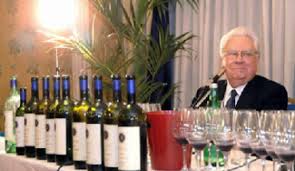
This grand tasting was one of the biggest events that took place at Vinitaly in 2016.  Organised by Vinitaly and Associazione Italiana Donne del Vino (Italy’s Wine Women Association), it marked the opportunity (given to selected guests) to taste 10 landmark wines from the 1967 vintage, produced by companies with women at the helm.  These wines have been coupled with their most recent vintage available, hence showing the evolution of top Italian winemaking in the last 50 years.  All this, at the 50th edition of Vinitaly, of course. Let us go through the wines and the sensations they transmitted.

La Scolca, Gavi 1967 (Piedmont white): Piedmont, land of great reds, but also of some interesting whites, such as Gavi, in this case.  Very pale yellow turning to light orange.  Date, bananas, ginger.  Bright acidity, some evident oxidation and steely notes.

La Scolca, Gavi 2015: bright yellow, crisp, intensely persistent, a bit light but very elegant. Nice.

Fratelli Berlucchi, Rosso di Franciacorta 1967 (Lombardy red): produced from a grape mix of Cabernet Sauvignon, Merlot, Barbera and Nebbiolo.  Orange-reddish colour, some marked oxidation and Marsala aromas.  Hints of cellar moist and dust.  Some acidity and persistence.

Fratelli Berlucchi, Mandola 2013: a red from Cabernet Sauvignon and Merlot.  Nice spicy Cabernet, good acidity backbone.  Some peppery notes between forest berries.  Good acidity and persistence. Nice.

Castello di Gabiano, Barbera Riserva 1967 (Piedmont red): Orangey colour.  Strong goudron and evolved notes (among them: earth, dirt, yeast and old cellar).  Still acid and vibrant, very persistent

Castello di Gabiano, Barbera Riserva 2011: Very intense black and red berries and cherries.  Vinous grapey flavour.  In mouth it is highly loquacious and lively, very acid, tannic and strong.  To lay down for the long run.  Good.

Capezzana, Villa di Capezzana Carmignano Riserva 1967 (Tuscany red): This wine was re-corked.  Strong coffee tones.  Dark red with bright orange rim.  Strong, voluptuous and super-balanced.  Tannic and well structured.  Still very lively and drinkable.  Astounding: not showing its 50 years at all!  Even an experienced taster would hardly guess its age!  Superb!

Capezzana, Villa di Capezzana Carmignano Riserva 2012: Nice flavours of small berry fruits, long and tasty.  Well balanced and elegant.  Velvety.  Strawberry is particularly evident, as are tannins.  Strong alcohol and astringent.  Very good.

Castello di Querceto, Chianti Classico Castello di Querceto Riserva 1967 (Tuscany red): Some volatile acidity.  Still very acid in mouth and still astringent. Big and powerful.  Notes of yeast and animal leather.  Vivid and lively, yet not so refined and too tannic and acid.

Castello di Querceto, Chianti Classico Castello di Querceto Riserva Il Picchio 2012: Still young, very acid and tannic.  For the long run.  The nose, however, has very pleasing cherry flavours and the palate is very persistent.  Good.

Lungarotti, Rosso di Torgiano Rubesco 1967 (Umbria red): Lively and fruity.  Tamed alcohol and tannins, very intense and persistent.  Strong tertiary notes of exotic tastes and yeast.  Quite in good shape for its age!

Lungarotti, Vigna Monticchio Rubesco 2012: Very fruity and complex nose.  Dark ink red colour.  Spicy.  Palate is full, alcoholic, tannic and astringent.  Not so balanced; a bit too harsh and hedgy.  Fairly nice.

Banfi, Brunello di Montalcino Poggio alle Mura 1967 (Tuscany red): Lovely nose of ripe fruit and spices with some leather notes.  Long and persistent in mouth.  Fully ripe.  Very pleasant and elegant, superb, long, balanced, rewarding. Wow!

Banfi, Brunello di Montalcino Poggio alle Mura 2010: Ripe plums, berries, coffe and sage.  Round and elegant.  Some evident tannins and acidity and a bit drying on a long finish.  Very good.

Fattoria dei Barbi, Brunello di Montalcino 1967 (Tuscany red): Yeasty hints in nose and mouth, otherwise pleasant.  Balanced and velvety, long and refined.  A very good wine with some wrinkles.

Fattoria dei Barbi, Brunello di Montalcino 2012: Lovely aromas of ripe berries, plums, pepper and other spices, cinnamon and dark chocolate.  Elegant and balanced on the palate.  Good structure and precise acidity, both well proportioned.  Long, persistent and very drinkable.  Excellent.

Rivera, Il Falcone Riserva Rosso Stravecchio Castel del Monte DOC 1967 (Apulia red): this wine offers many sensations; the most striking of them is an intense aroma and flavour of fennel!  Yes there is strong fennel with a mix of red fruits and spices.  Long, smooth and balanced, excellent.  Very interesting and truly a new experience in tasting fine wine!

Rivera, Il Falcone Riserva Rosso Castel del Monte 2012: the nose is not so strong or evident; it’s merely cherries and subdued spices.  In mouth, however, is broad and elegant, with a good balance between acidity and sweetness.  Very good equilibrium.  Long and persistent.

Masi, Camporiofin Rosso del Veronese 1967 (Veneto red): very dark red with slightly orange ring.  Lively and intense.  Again, a wine any educated taster would never initially believe from 50 years ago!  Very inviting, complex and long, some ginger, and an overall great class. Excellent!

Masi, Riserva Costasera 2009: dark red with violet hues.  Dark violets and ripe cherries with pastry and cinnamon.  Lovely, but strong.  Velvety and very intense, albeit evident alcohol.  Highly persistent.  Extremely good.

This tasting gave a unique opportunity to ascertain the evolution of Italian wine-making in the last 50 years (hence, since Vinitaly’s birth).  In the glasses tasters found noble wines.  Some of them showing the folds and lines of old age.  Some others, instead, are extraordinarily well-preserved, rightly mature, lively and pleasant… are they eternal life potions?  I think so!  They are all representing a long period of extraordinary improvements in quality and market success for Italian wine (and wine by Italian women in particular).

Wine Brexit

brexit

Brexit is real!  The majority of Britons have voted to abandon the European Union and a common European political, economic and social framework.  In recent times there has been much talk about this possible outcome and its consequences.  In the night, exit polls initially suggested a win by the pro-EU campaigners, but then the opposite anti-EU verdict materialized, bringing to everyone’s attention the new dramatic European situation and a plethora of uncertainties.  What does this mean for UK vs. EU in terms of wine commerce and consumption, now and in the future? We shall discuss this issue, dealing with current critical points, mainly from the perspective of UK consumers.

The UK wine market… what are we talking about?  Well, the UK is one of the most significant importers of wine in the world, including high value fine wine.  For certain product categories, for instance bubbly wine such as Champagne, it is “The” market.  Britons drink over 354 million litres of EU-produced wine each year, but that amount has dropped in the last few years as consumers have looked to New World wines from places like Argentina, Chile, South Africa, New Zealand and Australia.

Just four days ago Majestic Wine boss Rowan Gormley warned that Brexit would push up the price of wine as the cost of any imported goods will inevitably rise.  Majestic Wine is the largest specialist wine retailer in the UK.  Gormley stated that if Brexit would occur, causing a sustained fall in value of the British pound, then all imported products will have to go up in cost over time and wine will be no exception to that; wine from EU producing countries (priced in Euros) in particular.  He also said this scenario would affect all Majestic’s competitors equally, without upsetting the supply chain, but certainly hampering sales growth.  Gormley made the comments as Majestic announced its first sales progress in four years, one year into a turnaround plan.

There are three main factors that will determine post-Brexit business interaction criteria:

-currency rates (relative value of the British Pound vs. Euro, but also in the long term vs. the US Dollar and possibly vs. other currencies),

-trade tariffs (to be levied upon exchanges between the UK and the European Union),

-trade regulations and standards for products, services, labour, health and more.

It is obvious that the future will bring about great complexity, uncertainty and challenges, probably resulting in higher inefficiencies and higher costs, especially for UK consumers.

Sterling has been weakening against the Euro in the lead-up to the vote and it seems probable that it would continue to fall now that the “Leave” vote won; this would result in price rises across the board as the cost of replacement stock would immediately rise.  There are several UK wine market specialists who rely on the relevance and weight of their market to predict a less pessimistic way forward. But is it pure hope?  Some wine merchants claim it is unlikely that European wine-producing countries would impose additional tariffs, given the significance of the UK market.  Will Hargrove, Chief of Fine Wine at Corney & Barrow, said he had no real short-term fears because things will have to continue.  He also affirmed that in the longer term the UK has the favourable position of being a strong market for almost all European wine producers.  True, one can hope that everyone will desire as little disruption as possible, given the reciprocal importance of trade, but there is absolutely no guarantee of this.  EU bureaucrats have shown in the past relatively little knowledge and care for common viticulture and wine commerce (subsidies to agriculture, then subsidies to wine distillation, then vine-growing quota schemes and constraints, and so on).  Thus, one has the right to be optimistic, but also the responsibility to prepare for the worse.

For instance, let us see what the impact on Bordeaux wines could be, looking ahead to the Bordeaux 2015 en primeur campaign.  An exact figure on what percentage of en primeur sales is represented by the UK is hard to discern.  However, most experts and professionals indicate such UK market share to be around 20% (conservatively), with the lion’s share accounted for by the “big boys”.  The latest market figures from Bordeaux négociants indicate that the 2013 vintage (the one currently on sale, just as the 2015 en primeurs have been tasted) is being offered at either at or below release price in 90% of cases.  The highest upsurge, with 74%, is Petit Mouton, and the worst fall with 7% is Pagodes Cos d’Estournel.  Even the better quality 2012 vintage has 55% of Châteaux being available either at or under release price, and just 45% recording an increase since en primeur.  Source: Eleanor Wine (February 2016).  It has been pretty much common sense that Bordeaux 2015 exit prices (excluding Brexit effects) will be higher than the last few years.  The UK has never been part of the Euro zone, but Pound Sterling has fallen against the Euro in recent weeks amid uncertainty surrounding the Brexit referendum.  Exchange rates will affect post-Brexit en primeur campaigns making it more expensive to buy Bordeaux wines.

Away from exchange-rate effects, Brexit will be subject of extensive negotiations on a range of issues, meaning it is impossible to clearly define the long-term effect for UK wine consumers.  Nevertheless, until a new trade deal is fixed between the UK and EU, the ground would see European wine likely to become more expensive to UK consumers owing also to the introduction of trade tariffs after the UK will leave the EU.  For instance, as things now are, a 32% tariff would be imposed on imports of EU wine in the UK (a costly toll).  The reason is that the UK has negotiated as part of the EU at the World Trade Organisation (WTO); consequently it is probable that it would inherit the EU’s tariff regime at the time of leaving.  Such WTO tariff for wine is 32%.  Again, optimists hope on the fact that the UK market is so important to Spanish, French and Italian wine producers that one expects at least a significant reduction, if not a deletion, of the WTO’s 32% tariff.

Finally, let us consider that Brexit will also mean the end of EU subsidies to UK wine production industry, the end of favourable export of UK wine within EU borders (think of fizz, for instance), the end of easily available European labour within the UK wine industry as a whole.  A list of post-Brexit regulatory consequences could be very long.

In conclusion, following Brexit, what will happen in present and future is dim and uncertain.  Initially, at least, wines from the EU will be more expensive for UK wine drinkers and this will have an impact not only in the UK, but also on the European wine market as a whole.

Vinitaly 2016, 50th edition

Vinitaly 2016, 50th edition

The 50th edition of Vinitaly, one of the world’s most important wine and spirits exhibitions, was held in Verona from April 10th to 13th 2016.  The way to this relevant anniversary was led last year by Vinitaly’s operative management of the Wine Pavilion at Milan’s Expo and by constant international promotion of the event.  This year’ trade fair took place within 100,000 net square meters of exhibition space (a new record); the largest in the world, hosting more than 4,100 exhibitors from more than 30 countries.

Veronafiere (Vinitaly’s organising body) recently summed-up facts and figures regarding this year’s fair, stating it has been a clear success.  In general, professional attendance has been on the rise, totalling 130,000 visitors from approximately 140 countries, of which 28,000 have been international top buyers (up 23% compared to 2015).  In detail, audience statistics within top international buyers by country recorded growth for United States (+25%), Germany (+11%), United Kingdom (+18%), France (+29%), Canada (+30%), China (+130%), Japan (+21%), Northern Europe (+8%), Netherlands (+24%) and Russia (+18%).

There were also positive returns on the home front, with operators from Central and Southern Italy up on average by 15%.  The four days of the wine exhibition not only hosted B2B meetings but also more than 300 specific events including conferences, seminars and training courses.  Traditional exclusive tastings reached a climax with the one organised by Vinitaly International Academy in honour of Giacomo Tachis, one of Italy’s greatest wine-makers, who recently died.

At the same time, Vinitaly’s twin event “Vinitaly and the City”, aimed to involve and satisfy non-professional wine-lovers outside the exhibition’s walls in Verona, was also successful in attracting almost 30,000 participants.  “Vinitaly and the City” was lively and offered tastings, shows and cultural events in the beautiful setting of Verona’s historical city squares.  “The goal was to provide a clear signal to exhibitors and visitors, to ensure that the 50th Vinitaly would project the show into the next fifty years” said Maurizio Danese, President of Veronafiere.  He further declared: “We created a format that fully satisfied expectations, both for wine business specialists within the exhibition centre itself and through the wine festival in downtown Verona, with an extremely popular edition of Vinitaly and the City, and this is a source of pride and commitment to improve even further next year.  This edition was also an opportunity to celebrate the history of an event that has promoted Italian wine and its culture around the world for 50 years”.

On the side of business politics, Vinitaly number 50 was the first edition to be officially inaugurated by an Italian head of state.  President Mattarella highlighted the role of Vinitaly as a “vehicle for, and symbol of, Italian wine quality, renowned throughout the world”.  Vinitaly 2016 was also visited by Italian Prime Minister, Matteo Renzi, who discussed developments in wine online sales alongside Mr. Jack Ma, founder of Alibaba (a Chinese e-commerce world-leader).  The latter, speaking in Verona, launched the idea of having a “Wine Day” in China on September 9th.

As usual, Vinitaly was combined with Sol&Agrifood, (a relevant agricultural and food trade fair, in which premium olive oil is the star) and Enolitech, an exhibition promoting accessories and technologies for winemaking and olive oil production.  See respectively, www.solagrifood.com and www.enolitech.it.

Vinitaly’s 51st edition will take place on 9-12 April 2017.  For further information, visit www.vinitaly.it.

ProWein 2016

Prowein 2016 banner

Last week, on March 15th, ProWein 2016 ended in Düsseldorf, Germany. ProWein is a great wine happening, managed with typical German effectiveness, self-proclaiming to be “The World’s No.1 International Trade Fair for Wine and Spirits”.
ProWein opened its activities in 1994 with 321 exhibitors and approximately 1,500 visitors. In 2015, it had grown to 6,000 exhibitors from 50 countries and roughly 52,000 visitors. Of these, 84% were foreign exhibitors and 46% were foreign visitors. From March 13th-15th 2016 more exhibitors and visitors from throughout the world came to the Düsseldorf fair. Fresh figures for this year account for over 55,000 trade visitors (about 6% more than last year) and 6,200 exhibitors. The largest exhibitor nations this year included Italy (1,500), France (1,300), Germany (1,000), Spain (550), Austria (320), Portugal (300) and Overseas (600). Added to this were some 420 exhibitors from 30 countries with their special spirits. Exhibitors from a total of 59 nations attended the event. This year visitors travelled from 126 different countries. Hence ProWein is constantly growing. As many as half the visitors now come to Düsseldorf from abroad. Essentially, almost the entire wine world joins the event, making it one of the most relevant locations where global wine business is set and developed.
The highest rise in visitors from outside Europe was from Overseas, mainly from Asia. Overall, there seems to be a trend where ProWein is primarily attracting decision-makers with great purchasing responsibility: over 70% of visitors came from top or middle management. The success of the trade fair was also highly rated: one in two visitors confirmed that they found new suppliers and two-thirds were able to go home with useful information on trends and innovations. Just fewer than 96% stated they had entirely reached the goals of their trade fair visit. “Figures clearly show that ProWein is the world’s most important business platform for the entire sector. This is where the trade fair budgets are spent. And also for the major, prizewinning wine estates, ProWein has now become the absolute must-attending event,” proudly boasts Hans Werner Reinhard, Managing Director of Messe Düsseldorf (the city’s tradeshow organising body), summing up the success of ProWein 2016.
The high-level event programme at ProWein is extensive and diverse. Either organised centrally or by the exhibitors at their stands, it offers 3 days full of inspiration and innovation, such as: numerous tasting areas, surprising taste experiences at the Fizzz Lounge, sparkling classics at the Champagne Lounge, best-practice presentation at the special show “same but different”, special show “Packaging & Design”, top-class discussions and culinary events. Moreover, there is an appendix to the diurnal activity: with “ProWein goes City” a day’s bustle can continue into the evening: At one of the selected gastronomic partners of ProWein in Düsseldorf with their special events.
Immediately following ProWein in Düsseldorf is the premiere of ProWine Asia from 12 to 15 April 2016 in Singapore. Now in its fourth edition ProWine China in Shanghai will run from 7 to 9 November 2016. The next ProWein in Düsseldorf will be held from 19 to 21 March 2017. Dates for ProWein 2018 have already been set in Düsseldorf: from 18 to 20 March 2018. All information on ProWein can be found online at http://www.ProWein.de

Bolgheri at its best

Tastings at Bolgheri Consortium are a landmark event. They have kick-started my Vinitaly activities for several years now and so they did in 2015. As many of you know, Bolgheri is a DOC (Denominazione di Origine Controllata) in Tuscany’s coastal Maremma region. It first rose to prominence during the 1970s with the rise of famous “Super-Tuscan” wines like Ornellaia and Sassicaia. Here the focus is on red wine; whites taking the role of fresh ancillary complements. Bolgheri wineries have traditionally used very high proportions of international grapes, such as Cabernet Sauvignon, labelling their wines as simply “Vino da Tavola” (Table Wine). These wines have always been of great and improving quality, winning global acclaim and selling for unprecedented prices, higher even than those of other Tuscany’s finest. This resulted in an increasing number of companies joining the local consortium (40 out of a total of 52) and Italian authorities awarding Bolgheri its own DOC in 1994.

Lately, Bolgheri as well as the entire Italian wine industry, mourned the loss of Giacomo Tachis, an
eminent winemaker at the forefront of a decisive quality turn-around for Italian wine in the 1980s and consultant to several top Italian estates, headed by Tenuta San Guido, producing world-acclaimed Sassicaia. An article on this event was recently published on gourmettino.com

Bolgheri red wines are produced generally from a blend of Cabernet Sauvignon, Cabernet Franc, and Merlot. Other grapes, such as Syrah and Petit Verdot, but also Sangiovese (Tuscany’s distinctive vitis vinifera) are sometimes included, with interesting results. Vermentino is currently the most popular white grape, with Sauvignon Blanc and Viognier providing for a white international dimension.

A brief explanation of Bolgheri’s wine classification will ease quality understanding by the reader. White wines are labelled Bolgheri Bianco, while for reds there is a quality ladder. At the bottom of the red appellation there is Bolgheri Rosso DOC (maximum yield 90 q/ha, released only after September 1st of the year following harvest), then the next step is Bolgheri Superiore DOC (maximum yield 80 q/ha, aged for at least 2 years starting from January 1st of the year following harvest and for at least one year in oak barrels). The quality apex is coherently represented by Tenuta San Guido’s Sassicaia (from “sasso”, meaning stone in Italian), a wine with an assigned special DOC: Bolgheri Sassicaia DOC (minimum 80% Cabernet Sauvignon, maximum yield 70 q/ha, aged for at least 2 years starting from January 1st of the year following harvest and for at least 18 months in 225 l. barriques).

Tasting Bolgheri wines at Vinitaly 2015 confirmed the constant improvement on average of wines from this region, as well as the notable excellence offered by wineries leading the pack and acting as sources of reference and inspiration for most of the rest. Moreover, I could ascertain the increasing competence of such producers in handling international grape varieties, Cabernet Franc in particular, and merging them with a solid Tuscan soul. I will list here below the wines that have starred in Vinitaly’s 2015 Bolgheri tasting, grouping them according to denomination (DOC):

BOLGHERI BIANCO
– Donna Olimpia Bianco 2012, produced by Donna Olimpia 1898: Good. Long, balanced, an interesting blend of Vermentino, Viognier and Pétit Manseng, where the latter speaks-out.
– Borgeri Bianco 2014, by Giorgio Meletti Cavallari: Good. Light colour, lively nose and mineral palate, medium body, blend of Vermentino and Viognier.
– Un Pò Più Su del Mare 2013, by Mulini di Segalari: Bizarre name on label… Interesting bio wine produced in terracotta amphorae, atypical, fresh, slightly oxidised, blend of Vermentino and Manzoni Bianco grapes.

BOLGHERI ROSSO
– Le Serre Nuove 2012, produced by Ornellaia: Extremely good (more so considering the price positioning of the wine). Berry fruit, coffee and spices, good body and persistence, balanced and elegant.
– Piastraia 2011, by Michele Satta: Very good. Sangiovese in the grapes mix. Alcohol at 13.5% well set in an overall pleasant balance, long and persistent, plums, peppers and spices.
– Villa Donoratico 2012, by Argentiera: Very good. Nice fruit, good acidity and structure, persistent, elegant and complex.
– Varvàra 2013, by Castello di Bolgheri: Very good. Subtle oak and fruit aromas, classy, velvety, rewarding.
– Felciaino 2013, by Chiappini: Quite good. Sangiovese is in the mix and you can feel it. Lovely fruit and acidity, tasty.

BOLGHERI SUPERIORE
– Ornellaia 2012, produced by Ornellaia: Excellent. Blackberries and vanilla aromas plus coffee and spices, complex, slightly mature, very refined but a little astringent and off-balanced for its class. Probable improvement with bottle ageing.
– Argentiera 2012, by Argentiera: Very good. Very complex, long, elegant, superior fruit, harmonic, long and great finish.
– Castello di Bolgheri 2011, by Castello di Bolgheri: Extremely good. Great plums and berries aromas, elegant, complex and superbly balanced. Good ageing potential.
– Millepassi 2012, by Donna Olimpia 1898: Very good. Round, juicy, intense and in equilibrium, long-lasting on the palate.
– L’Alberello 2012, by Grattamacco: Very good. Wonderful grapes integration, delicate, persistent, refined, round and intense.
– Guado al Tasso 2012, by Guado al Tasso: Very good. Remarkably Tuscan, strong rosemary aromas, good body, gratifying.
– Paleo 2011, by Le Macchiole: Interesting, 100% Cabernet Franc. Peppery and fruity, round, intense, slightly astringent, medium structure, permeated by Tuscan terroir.

BOLGHERI SASSICAIA
– Sassicaia 2012, by Tenuta San Guido: Outstanding. The best wine of the tasting and one of the very best savoured at Vinitaly 2015. This vintage 2012 sets Sassicaia above Ornellaia (the latter being slightly preferred in the previous couple vintages). Excellent precision and equilibrium, tasty, refined, superb elegance, nose of blackberries, cranberries, coffee, chocolate and spices, great body and persistence, austere, coherent, solid, classy, a pure pleasure in the mouth. A wonderful wine.

I would like to conclude my article highlighting three final points emerging from Bolgheri’s 2015 Vinitaly presentation. The first is centred on a discernible Tuscan terroir imprinting on most wines, especially 2012 Bolgheri Superiore. Terroir really emerges above international grapes in the complex mix of ingredients producing Bolgheri reds, giving them a unique and distinctive character and dimension through scents of Tuscan greeneries, scrubs, rosemary, thyme, sage and terracotta: a truly Etruscan soul is expressed by these wines.
The second point is the continuous development of Bolgheri’s productive context, with new ideas, improvements and producers moving the DOC forward. One of such new wineries is Villanoviana, freshly presented at Vinitaly 2015: its wines are worth mentioning for their quality and potential. I have tasted their good Teia Bolgheri Vermentino and San Uberto Bolgheri Superiore 2012, the latter being particularly pleasant, round and full. Hence, Villanoviana is a winery with good future prospects, with passionate Barbara and Marco Monacelli at the helm.
Lastly, I would like to express my gratitude to the Bolgheri Consortium team (headed by Riccardo Binda) for the impeccable tasting and presentation offered every year and the useful information, discussions and exchange of ideas giving me a clear and thorough taste and knowledge of Bolgheri wines.

Bolgheri DOC Team

Bolgheri DOC Team

Mediastars Awards VINO: the first App devoted to Italian wines

The official name is VINO – Vinitaly Wine Club: the App dedicated to the world of Italian wine. Promoted by Vinitaly and VeronaFiere, this revolutionary App is offered to discover and purchase the finest Italian wines.
VINO – Vinitaly Wine Club App has received MEDIASTARS Trophy for the best 2015 app. The award will be presented in June 2016. Mediastars is an independent award, now in its twentieth edition, created by prominent Italian advertising agencies and media companies (visit its English web page at http://www.mediastareditore.com/mediastars/?doc=611).
VINO – Vinitaly Wine Club was launched as a “pocket” guide for more than 1.5 million visitors that have entered the “VINO a Taste of Italy” Pavilion at Expo Milano 2015, tasting more than 1,000 Italian wines in the “Biblioteca del Vino” (“Wine Library”) set there. Since then, thousands of active consumers use the app every day, making VINO the leading e-commerce App for buying Italian wine. Moreover, it is the most representative and prestigious global showcase for Italian quality wineries. VINO App is a mobile extension of Vinitaly Wine Club and it offers a unique wine experience, in order not only to buy wine quickly and easily, but also to increase and spread a greater knowledge of Italian wine. Browsing is simple and based on three key wine commerce points: Explore, Taste, Shop.
For further information visit : Vinitaly Wine Club Web http://www.vinitalyclub.com

US and Italy lead Wine Spectator’s Top 100

The 2012 Au Paradis Cabernet, produced by Peter Michael Winery was recently named wine of the year by Wine Spectator, heading its latest Top 100 wine list. Wine Spectator’s leading names see US wines account for 27 entries, whereas Italian wineries had 20 wines listed, including five Brunello di Montalcino 2010. American and Italian wines lead the pack, with the US taking all the podium medals: the 2012 Quilceda Creek Cabernet from Columbia Valley (Washington) and Oregon’s 2012 Evening Land Seven Springs Pinot Noir reached second and third places respectively.

This year’ Top 100 also significantly presented the first New Zealand wine in the top 10, with Larry McKenna’s 2013 Escarpment Kupe Pinot Noir coming seventh. It was one of four Kiwi wineries in the list, together with Cloudy Bay, Felton Road and Kumeu River.

Last year’s emphasis on Douro (Portugal) is confirmed by Wine Spectator, as four of such wines are currently listed. The Iberian Peninsula proudly presents also two Spanish Ribera del Duero wines. Other wines included in Wine Spectator’s new “Hall of Fame” come from various prominent wine-producing countries, such as France, Germany, Greece, Chile, Argentina, Australia and South Africa.

Tachis’ death shakes Italian wine

Tachis’ death shakes Italian wine

Giacomo Tachis, has died on the first weekend of February in San Casciano Val di Pesa (Tuscany) where he lived. This is a great loss for Italian wine.

Tachis was an Italian winemaker who had a fundamental role in producing some of Italy’s most prestigious wines, especially Super-Tuscans, pioneering the use of Cabernet Sauvignon near the Tuscan coast. He influenced the recovery of Italian fine wine in the 20th century. For instance, he was in charge for production of Sassicaia, Tignanello and Solaia within Antinori’s fine wine stable.

Born in 1933 in Piedmont, he studied oenology in Alba. Tachis “belongs to that small, select group who changed the course of Italian wine”, wrote Richard Baudains in the Decanter magazine feature that accompanied his Decanter Man of the Year 2011 award.

Tachis always emphasized the need for balance, authenticity and terroir in wine, no matter what grapes would be used. This underlines his coherence in dealing with Cabernet Sauvignon within a Tuscan framework.

Tachis’ legacy as a winemaker continues to loom over the Italian wine world. And many of the labels that he created, such as Sassicaia and Tignanello (Tuscany), Turriga and Terre Brune (Sardinia), to name just a handful are still widely considered to be among Italy’s best.

On February 8th, Veronafiere (Vinitaly’s organising institution) announced that this year’s Vinitaly, on its 50th year of activity, will dedicate a memorable tasting in honour of Giacomo Tachis. This event, will be this year’s most important tasting held at Vinitaly (April 10th-13th) and will be centred on Tachis and his wines: 50 years of Italian wine renaissance. Giovanni Mantovani, director of Veronafiere (Vinitaly’s organising institution), said that the tasting will be led and illustrated by those producers who had the honour of working with him.

We look forward to this event and to report on this great winemaker and his landmark wines.

Robert Parker’s 50 Best New Releases from 2015

World-famous wine critic Robert Parker and his team published a round-up list of their top wine picks from last year. These new wine releases from 2015 have been judged by the Wine Advocate squad as the “most exciting based on absolute Quality, Singularity and Hedonistic / Intellectual appeal. In no particular order, these wines all represent the pinnacles of greatness while spanning a broad range of countries, regions, grapes and styles”. These wines have been selected from over 30,000 tasting notes produced by the American wine guru and his aides-de-camp. In this collection of oenological excellence figures account for 21 white and sparkling wines and 29 reds. Out of the 50 total labels, 11 are American, 19 French and 6 Italian.

Whites

2013 Kongsgaard Chardonnay The Judge, Napa, California, USA
2013 Aubert Chardonnay Eastside, Russian River, California, USA
2013 Fontaine Gagnard Batard Montrachet Grand Cru, Burgundy, France
2013 Domaine Raveneau Grand Cru Valmur, Chablis, France
2014 Kumeu River Mate’s Vineyard Chardonnay, New Zealand
2012 Chateau Haut-Brion Blanc, Pessac-Leognan, Bordeaux, France
2014 Morlet Family Vineyards La Proportion Doree, Sonoma, California, USA
2013 Schäfer-Fröhlich Stromberg Riesling GG, Nahe, Germany
2013 Markus Molitor Zeltinger Sonnenuhr Auslese *** (Golden Capsule), Mosel, Germany
2012 Schloss Gobelsburg Riesling Tradition, Austria
2012 Zind-Humbrecht Riesling Grand Cru Rangen de Thann Clos St Urbain, Alsace, France
2014 Sheldrake Point Winery Riesling Ice Wine, Finger Lakes, New York, USA
2007 Domaine Macle Château Chalon, Jura, France
2014 Domaine Huet Vouvray le Mont Sec, Loire, France
2014 Sadie Family Mev Kirsten Old Vine Series Chenin Blanc, Stellenbosch, South Africa
2014 M. Chapoutier Ermitage l’Ermite Blanc, Hermitage, France
2013 Tenuta dell’Ornellaia Bianco Ornellaia,Bolgheri, Italy
2011 Domaine Sigalas Nychteri, Santorini, Greece
NV Equipo Navazos La Bota de Amontillado Bota A.R. 49, Jerez, Spain
2006 Ca’ del Bosco Franciacorta Cuvée Annamaria Clementi Brut Riserva, Lombardy, Italy
NV Egly-Ouriet Blanc de Noirs Brut Les Crayères (disgorged Nov 2012), Champagne, France

Reds

2012 Bevan Cellars Cabernet Sauvignon McGah Vineyard, Napa, California, USA
2012 Lokoya Cabernet Sauvignon Mount Veeder, Napa, California, USA
2012 Harlan Estate Proprietary Red Wine, Napa, California, USA
2012 Château Haut-Brion, Pessac-Leognan, Bordeaux, France
2012 Château La Violette, Pomerol, Bordeaux, France
2012 Betz Family Winery Cabernet Sauvignon le Parrain, Washington, USA
2013 Viña Seña, Aconcagua, Chile
2013 Per Se La Craie, Mendoza, Argentina
2013 Achaval Ferrer Malbec Finca Altamira, Mendoza, Argentina
2013 Domaine du Comte Liger-Belair La Romanee Grand Cru,Burgundy, France
2013 Domaine Duroché Chambertin Clos de Bèze Grand Cru,Burgundy, France
2012 Eyrie Vineyards Pinot Noir Original Vines Reserve, Oregon, USA
2013 Richard Rottiers Moulin a Vent Climat Champ de Cour, Beaujolais, France
2007 Vietti Barolo Riserva Villero, Piedmont, Italy
2010 Elio Grasso Barolo Gavarini Vigna Chiniera, Piedmont, Italy
2010 Casanova di Neri Brunello di Montalcino Tenuta Nuova, Tuscany, Italy
2010 Il Marroneto Brunello di Montalcino Madonna Delle Grazie, Tuscany, Italy
2012 Cayuse Syrah Bionic Frog, Washington, USA
2014 Lismore Estate Syrah, Western Cape, South Africa
2013 l’Aventure Winery Estate Cuvee, Paso Robles, California, USA
2013 Château Beaucastel Hommage à Jacques Perrin, Châteauneuf du Pape, France
2011 Guigal Cote Rotie la Landonne, North Rhone, France
2013 Domaine Anne Gros Minervois les Carretals, Languedoc, France
2010 Henschke Hill of Grace, Eden Valley, Australia
2012 Jim Barry The Armagh, Clare Valley, Australia
2012 Clarendon Hills Astralis, McLaren Vale, Australia
2013 Álvaro Palacios L’Ermita, Priorat, Spain
2012 Pingus, Ribera del Duero, Spain
2012 Dona Maria Alicante Bouschet Jb, Alentejano, Portugal

Le Salon des Vins de Loire 2016

This year’s Salon des Vins de Loire (Loire Valley’s Wine Trade Fair) will take place on Monday 1st, Tuesday 2nd and Wednesday 3rd of February at Angers’ Exhibition Centre.

The key objective for this year’s fair is to encourage discovery, encounters and exchanges between Loire Valley’s growers, traders, wine-merchants, co-operatives and French & international buyers, thus promoting sales. Emphasis will be placed on tastings.

The Loire Valley Wine Trade Fair was founded in 1987 by the Angers Exhibition Centre. Exclusively for professionals, it is a chance for French and international visitors to get a preview of the year’s vintages, before they go on sale.

Over three days, nearly 400 producers from Pays Nantais, and the Anjou-Saumur, Touraine and Loire Centre regions, will offer to the expected 9000 professional visitors an opportunity to discover all the richness and freshness of the Loire region through a high quality and diverse range of wines: red, rosé, white, sweet and dry, still and sparkling.

For more information visit http://www.salondesvinsdeloire.com