Vinitaly 2019, better than ever

Republished from April 15, 2019 and updated

Some 125,000 people from 145 countries visited Vinitaly this year.  The 53rd edition of Italy’s international wine and spirits exhibition was held between April 7 and April 10, as usual in the beautiful town of Verona.  According to Veronafiere, the organiser, Vinitaly has attracted a record number of visitors (among them over 33,000 foreign buyers) and exhibitors (about 4,600 from 35 countries occupied a net show area of 100,000 sq.m.).  Vinitaly also proved to be one of the World’s top wine trade fairs through the launch of a new multi-channel wine promotion platform for Asia with a Chinese partner.

“The major feature of this year’s Vinitaly has been its international trait, confirmed by a further 3 percent increase in the number of foreign buyers” said Veronafiere Director Giovanni Mantovani.  He further noted that: “this has also been a very digital edition, with over one million visits to our multi-language directory in the two weeks across the event”.

According to follow-up data from the organising body, the top five countries representing foreign buyers at the event were Canada (18 percent rise), the UK (9 percent), Germany (4 percent), China (3 percent) and the United States (2 percent).

The offering at Vinitaly was integrated by the simultaneous occurrence of Sol&Agrifood (Veronafiere’s quality agro-food show) and of Enolitech (an exhibition of technical accessories and technologies for olive oil and wine production).  Furthermore, this year Vinitaly Design made its debut: a showcase for products and accessories to complement the offering associated with wine promotion and sensory experience, items used for tasting and service, furniture for wine cellars, wine stores and restaurants, customised packaging services.

The Asian market, China in particular, was a major focus at Vinitaly for both management and exhibitors.  A new multi-channel permanent “Wine to Asia” platform to promote Italian wine to Asia was launched on the closing day by Veronafiere and its Chinese partner, the Shenzhen Taoshow Culture & Media Company, belonging to the Shenzhen-based Pacco Communication Group.  “The Far East is an area that has to be monitored constantly.  Therefore we have set-up a permanent initiative capitalising on more than twenty years of activity in the area”, explained Veronafiere’s President Maurizio Danese.  The initiative, scheduled in 2020, aims to strengthen the promotion of the variegated world of Italian wine in Asia.  Further, Danese said that: “as Veronafiere/Vinitaly, our priority is to serve as a catalyst for the promotion of Italian wine to China, because we do believe our world of wine needs to present itself under the same umbrella, in unity”.

Veronafiere’s objective is to considerably rise the market share in the Far East, where Italy today ranks fourth among the largest foreign wine exporters, far behind France (its direct global competitor), and also behind Australia and Chile.  According to a recent study conducted by Vinitaly together with think-tank Nomisma Wine Monitor, Italian wine’s penetration in the Far East is still minimal compared to the country’s potential.  Research showed that Italy’s market presence in the area was trapped at 6.5 percent (419 million euros, about 472 million U.S. dollars), versus France’s 50.2 percent (3.24 billion euros), Australia’s 15.9 percent and Chile’s 8.9 percent.

Between 2008 and 2018, wine imports in the Far East increased by 227 percent, 11 times more than in Europe and almost 4 times more than in North America (US and Canada), according to customs data analysed by the report.  Italian experts and winery operators alike admit that the country was paying a price for having moved late to Asia and China compared to their French competitors, who started over 20 years ago.

How does Vinitaly fit within this picture and its future colours?  According to Danese, Italy’s current Asian export ranking is not appropriate; it should change to become at least third.  To reach this goal, Veronafiere partnered with Shenzhen’s Pacco Communication:  the Chinese partner in the “Wine to Asia” platform.  Pacco started working with Veronafiere in 2014, assisting to promote Italian wines with an off-show event alongside China’s oldest wine and spirits fair in Chengdu, and with road shows in China’s first and second-tier cities.

Both Veronafiere and Pacco Communication underlined the importance of choosing Shenzhen as home city for the new initiative, as it attained the highest growth rates in China over the last twenty years and is home to some 30 percent of all wine importers in that country (obviously targeted as Asia’s most relevant).  Moreover, Shenzhen is the third most important city in economic terms after Beijing and Shanghai, and is considered the city of innovation and digital communication in China.

Pacco’s CEO, Alan Hung, professes confidence on growth of Italian wine in Asia, believing that it is a very good choice for the Chinese market and, although it is not yet very strong as it should at the moment, Italian wine will be the future of Chinese and Asian markets.

Hence, we will follow developments in the course of this year and will assess new scenarios as time will take us to the next edition of Vinitaly (the 54th), scheduled on 19-22 April 2020.

Banfi Vintners and Riunite-CIV agree to separate their activities

After a partnership covering over 50 years, Banfi Vintners and Cantine Riunite-CIV have agreed to part ways in USA.  After a conclusive transition period ending on June 10th, 2019 Riunite-CIV brands will be marketed in the US by Frederick Wildman and Sons.  Riunite-CIV is a leading Italian producer and seller of Lambrusco and within its portfolio has also the renowned Maschio Prosecco brand.

“With all the history we have made together, this is a difficult announcement to make,” says Banfi Vintners CEO Cristina Mariani-May.  “However, after thoughtful consideration for our long-term goals, both sides concluded that it is time to move on.”

Banfi started importing Riunite-CIV in North America in 1967.  “On behalf of Cantine Riunite-CIV, I would like to thank the Mariani family and Banfi Vintners for their collaborative partnership over many years and wish them the very best for their future business,” said Vanni Lusetti, General Manager of Riunite-CIV.

Mariani-May added: “Moving forward, we will be focusing our energy on further developing and enhancing our premium and luxury offerings, led by Brunello di Montalcino and the Super Tuscans of Castello Banfi, often winners of the  Gran Vinitaly Prize.  We are excited to take our portfolio of global brands to the next level with this new emphasis.”

Artificial Intelligence and wine experts tie in food and wine pairings

Last January 22nd, a first-time contest in Paris opposed two wine experts,  critic Antoine Gerbelle and sommelier Paz Levinson, against “Matcha”, an artificial intelligence device with the purpose “to help sell wine” as stated by its creator Thomas Dayras.  The first assessment was to suggest the best wine for classic, gourmet or complex food, with challenging ingredients for wine pairing.  The second test required replying to bids such as “I am looking for a bottle of white wine to open for my birthday, I enjoy organic wine and my budget is €50 max”.  The third involved planning a restaurant wine list based on information inputs regarding personality, dishes and location.  The Umpiring Panel, was formed by Michelin-starred chef Alain Dufournier, winegrower Clément Pinard and Paolo Bouca Nova, commercial director of “Repaire de Bacchus” which provided the wines database.  The judges rated the anonymous responses of the two humans and of the AI wine merchant.  The verdict assessed that in the first two tests, humans defeated the “machine” with a slight advantage for Antoine Gerbelle.  Matcha’s suggestions for complex dishes were quite honourable, except for one, which its founder has agreed to correct.  For the third test, the panel preferred the wine list designed in just a few seconds by Matcha to the one Paz Levinson took an hour to prepare.  Hence the overall result of this contest was certified as an equal finish.

Vinitaly 2018, a review

Italy’s biggest wine trade show, Vinitaly, took place for the 52nd time in its hometown of Verona, last April 15-18, 2018.  Its organizing body, Veronafiere, commented final data and figures as a success for this year’s edition. In synthesis, 128,000 visitors from 143 countries attended the fair during its four days of operation. Of these, accredited international buyers grew 6% to 32,000 vs. last year. Compared to 2017, the largest professional international attendance growth by country in percentage terms is as follows: United States +11%, China +34%, Northern Europe (Sweden, Finland, Norway and Denmark) +17%, the Netherlands +15%, Poland +27% and even tripled from Israel. In terms of foreign buyers’ absolute attendance, those from the USA were the largest group, followed by buyers from Germany, the United Kingdom, China, France, Northern Europe (as above), Canada, Russia, Japan, the Netherlands and Belgium. More than 4,380 exhibiting companies, from 36 countries, attended the 4-day event (130 more than in 2017). “Vinitaly and the City”, the fair’s various events open to the general public (not merely wine professionals as Vinitaly itself) attracted almost 60,000 wine-lovers in the towns were such happenings took place: Verona itself and three historical towns within its province (Bardolino, Valeggio sul Mincio and Soave). “Vinitaly 2018 confirmed its dedicated vocation to business and promotion of the wine world,” said Maurizio Danese, President of Veronafiere. He continued by stating that: “This is the right way forward, as identified with determination during the 50th anniversary edition. The show in the Exhibition Centre itself (Vinitaly) is increasingly focused on professionals, while the off-show events for wine lovers in the city (Vinitaly and the City) has also grown considerably. Vinitaly and the City by now has emerged from the start-up stage to become a product in its own right and as such will be further developed as of the next edition.” Vinitaly’s attractiveness was integrated and further expanded, as usual, by the simultaneous occurrence of “Sol&Agrifood”, the quality agro-food show, and “Enolitech”, the event focusing on accessories and technologies for olive oil and wine production. The 53rd edition of Vinitaly is scheduled on April 7-10, 2019 in Verona, of course. Website: http://www.vinitaly.com

ProWein 2018, how did it go

All relevant wine-growing regions in the world were represented at ProWein providing a complete overview of global wine ranges. Add to this a selection of some 400 spirits specialities.  Newcomers included a joint stand from the Japanese government themed around sake as well as a large stand featuring various Palinka fruit brandies from Hungary.

ProWein 2018 has continued its growth as one of the largest wine and spirits trade fairs globally with over 6,870 exhibitors this year up from 64 countries up from 6,615 exhibitors from 62 countries in 2017.  Over 60,000 trade visitors attended up from 58,500 visitors a year earlier.  ProWein officials say that in 2018 one in two visitors found new suppliers at the show and 95 per cent of those surveyed saying they had fully achieved their objectives at the show.

New to this year’s show was an exhibition theatre of craft drinks with 76 exhibitors from 15 countries presenting craft beers, spirits and ciders.  “Our new offering was received extremely well. This shows we have our finger on the pulse of the industry here and have succeeded in staging the theme right to the point. We are on the right track here and look forward to expanding the concept even further,” says Marius Berlemann, Global Head Wine & Spirits and Director of ProWein.  Over 300 organic wineries were also on display in a specific area of the exhibition.

The programme of events that rolled at ProWein 2018 was nothing short of spectacular: numerous tastings were scheduled for the ProWein Forum in Halls 10 and 13. Add to this, a host of events right at the exhibitors’ stands. The spectrum of approximately 500 events ranged from tastings with a national focus to cross-origin presentations like the Tasting Zone organised by the international wine award Mundus Vini.  Themed highlights also include the unique Champagne Lounge boasting 40 tradition-rich Champagne cellars. It was located in the centre of the Champagne segment where some further 150 labels are presented. The special “Packaging & Design” show complemented the ranges of ProWein displaying current trends and developments in packaging.

Right after ProWein in Düsseldorf 24 to 27 April will see ProWine Asia 2018 being held in Singapore. ProWine China 2018 in Shanghai will follow from 13 to 15 November. The next ProWein in Düsseldorf is scheduled from 17 to 19 March 2019.

Vinitaly 2017, 51st edition

Republished from April 18, 2017

The 51st edition of Vinitaly, Italy’s top wine trade show, took place in its hometown, Verona, in April 9–12, combining lively celebration and restrained analysis of world-wide variations affecting the global wine industry.  This consistently international event drew 128,000 visitors from 142 countries; more than 30,000 foreign accredited wine buyers (+8% over 2016, out of a total international attendance of 48,000), and 4,270 exhibitors from 30 countries.  International operators increased over 2016: from the United States (+6%), Germany (+3%), United Kingdom (+4%), China (+12%), Russia (+42%), Japan (+2%), Northern Europe (+2%), the Netherlands and Belgium (+6%).  Though Italian wine remained the star, this year’s edition also highlighted more exotic products, such as Chinese “Bordeaux-style” blends from Ningxia, to English sparkling wine.

Veronafiere, Vinitaly’s organising body, highlighted its move towards a clearer distinction between business occasions in the exhibition premises and the off-show events dedicated to wine lovers in Verona’s city centre and its province: “Vinitaly and the City” (the name of this dual event/location concept) this year attracted 35,000 wine lovers to the historic centre of Verona and to Lake Garda’s wine-town of Bardolino.  The fair itself started with a happening called “OperaWine”: smartly playing on the Veronese ancient Roman Arena (annually home of a prestigious summer opera festival), OperaWine drew more than 1,000 invited guests to a grand tasting at the remarkable Palazzo Gran Guardia, showcasing 104 selected Italian wineries representing the country’s 20 regions and presenting wines produced from over 60 grape varieties.  At the historic Palazzo Giusti del Giardino, the “Grandi Cru d’Italia” (an association of leading Italian wineries), held a charity auction of its associates’ wines to help a non-profit group that assists children suffering from neurological disorders.

Attracting consumers as well as professionals, Vinitaly is the opportunity to assess the state of Italian wine.  This year’s edition featured several seminars and conferences on topics such as terroir, grape varieties, marketing and communications, and so on.  The countless tastings extended from comprehensive regional evaluations to dedicated verticals of primary producers.  The four days of the event offered almost 400 conferences, seminars and training courses focusing on the world of wine.  As ever, there was an impressive calendar of tastings: more than 250 were organised directly by Vinitaly and regional consortia.

International trade and its future were also subjects of careful attention, with two strategic countries as specific targets: the U.K., which is now in the process of leaving the European Union (read my “Wine Brexit” article), and the United States, where federal bureaucrats are thinking of imposing tariffs on imported products such as wine and spirits.  Simultaneously, the Italian wine industry carries on its effort to target the Chinese market.  Actually, Vinitaly’s theme this year was the new “Silk Road” for wine.  A special happening showcased the Chinese wine and spirits giant “1919”.  Its CEO, Robert Yang, defined his idea to grow from currently 1,000 retail stores to 6,000 by 2019, and promised to increase 1919’s offer of Italian wine by that year.  Italy presently accounts for a meagre 5 percent of China’s wine imports, far behind France and Australia.  China was represented at Vinitaly also by other business giants such as Alibaba, Cofco, Winehoo and Suning.

On the final day of Vinitaly, acclaimed oenologist and wine entrepreneur Riccardo Cotarella and a group of his clients known as the “Wine Research Team” organised a conference: “New Frontiers of Italian Viticulture and Oenology.”  The group’s scientific director, Attilio Scienza (a foremost Italian agronomist, teaching at the University of Milan and a consulting winemaker), elucidated that several of such important “Frontiers” are sustainable solutions to a changing and warming climate.  His advice is to: “find clones and varietals that are resistant to drought and that can resist diseases”.

As usual and very conveniently, Vinitaly was integrated by the simultaneous scheduling of other “sister” tradeshows: Sol&Agrifood (the quality agro-food show, with a focus on top olive oil), and Enolitech (focusing on accessories and technologies for olive oil and wine production, celebrating its 20th edition).

The next Vinitaly, the 52nd, is scheduled 15-18 April 2018.

International Volcanic Wine Conference planned in New York

On March 27th, 2018 Master Sommelier and award-winning author John Szabo, will hold an “International Volcanic Wines Conference” (IVWC) in New York City.  In 2016 Szabo published a book titled: “Volcanic Wines: Salt, Grit and Power”.  Through the IVWC, Szabo wishes to create a volcanic wine movement in the US.

This follows similar pioneering initiatives already in action in Europe such as “Vulcanei” in Italy in which last year (May 6th and 7th, 2017) over 200 volcanic wines from more than 50 Italian producers were presented and tasted (www.vulcanei .wine).

Szabo would like to provide educational and promotional opportunities for volcanic wine producers internationally, with an eye to the North American market.  His conference will act as a sponsor to ultimately combine the world’s volcanic regions and create a “volcanic wine brand”: an exclusive class of wines produced within volcanic viticultural settings.  The IVWC aims also to classify its “volcanic wine brand” as premium high quality wines with a true sense of place, thereby increasing their perceived value.  However, volcanic soils and perceived value are not guarantee of excellence in the bottle…  There is much more than this.  Szabo’s work will certainly be heavy and complex, and will be meaningful the greater the number of quality vinous participants.  Moreover, objectivity is crucial to make the IVWC a reference in global volcanic wine, rather than simply another business and marketing initiative.

Within the IVWC, participants will discover the exceptional features that characterise volcanic wines, with involvement of expert insight and wine producers from different areas such as Soave, Campania, Basilicata, Sicily, Santorini, Tokaj, Badacsony, Somló, Washington State.

The IVWC confirms that world-wide attention concerning quality wines produced on volcanic soils is fermenting and increasing.  This is certainly excellent for wine aficionados and companies.

America loves Moscato

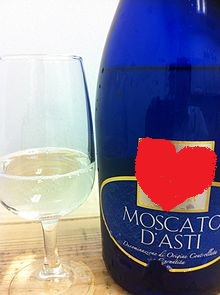
Moscato is both the Italian name for the Muscat vine variety group and the name for specific varietal slightly sparkling sweet wines, with underlying acidity, produced with Muscat grapes.  “Moscato” on Italian wine labels relates to a varied range of wines, from non-sparkling dry whites to fully sparkling wines to very sweet, dessert wines.  The wines usually have floral aromas of orange blossom and golden or white peaches.

Muscat is one of the oldest grapes used by man to make wine.  Ancient Greeks and Romans cultivated these vines and produced renowned wines from them.  Several varieties of Muscat are used, but the best quality wines are made from Muscat Blanc à Petit Grains, also known in Italy as Moscato di Canelli.  It is Italy’s fourth most planted white variety.  Muscat family vines are widely planted in several countries.  Yet, the type most commonly planted in California is Muscat of Alexandria, quite a less significant grape.

Some of these wines, especially those produced in Italy’s Asti region, are of excellent quality.  However, others are appalling, in particular those produced by gargantuan wine industry multinationals.  The finest lightly sparkling bottles come from the area around the town of Asti in Italy’s Piedmont.  They are called “Moscato d’Asti”, and they are prepared by halting fermentation (rapidly lowering its temperature) once the alcohol level grows to 5.5%.  Their natural fizziness originates from the carbon dioxide released during fermentation.  The wine is then filtered to remove yeasts, so to prevent further fermentation in the bottle.

Moscato is a relatively inexpensive, lightly sparkling, sweet wine with good acidity.  It can be enjoyed as an aperitif, with pâté or similar food or as a complement to dessert.  It also supports spicy Asian dishes, savoury meals, tapas and cheese.

The best, multifaceted and food friendly Moscatos are those produced in Italy, again in the Moscato d’Asti area.  Moscato d’Asti should not be confused with Asti Spumante, the latter being a fully sparkling and higher alcohol sweet wine also made from Muscat in Asti.  “Spumante” on the label is the Italian word for sparkling (“foamy”).  The region’s best and ripest grapes are used for Moscato d’Asti.

A shortlist of some of the best Moscato names would include: Saracco, Ceretto, Bera, Fratelli Barale, La Spinetta, Marchesi di Grésy, and Vietti.  Please note that the finest producers of Moscato d’Asti often also produce great Piedmontese red wines (Barolo and Barbaresco); this makes enticing looking for both.

Americans are building a powerful sweet wine trend.  US Sales of Moscato wine rose in the past several years, especially among relatively young buyers (21 to 30 years of age).  Nielsen reports for wine consumption in the US say that sales of Moscato there increased over 200% between 2009 and 2011, and that they rose again by 78% in 2011, exceeding $300 million in sales that year.  Moreover, Moscato has become a huge cultural phenomenon in the rap and hip-hop music worlds in the past years, with Moscato being mentioned in several big hit songs.  Sales of Italian Moscato d’Asti in the US rose by near 50% during that time.  However, US giant wine company Gallo, commands the American market in volume terms with around a 43% share (selling both Barefoot and Gallo Family bottlings), while Trincher’s Sutter Home Brand has about a 27% share.

The amount of Moscato grown in Italy is obviously limited.  Big wine firms (Americans in particular) have been purchasing it with increasing “thirst”, consequently raising prices for the grape to their highest level ever.  Moscato vines are also rapidly and extensively being planted in Australia, Chile, France and California’s Central Valley, but those new plantings will take years to come into production.  To create the big quantity asked by the American market, mammoth producers are reportedly adding wines from neutral white varieties such as French Columbard (and others) to their Muscat bottlings, thus diluting the amount of real Moscato in the bottles being sold.

English Sparkling Surge

English sparkling wine is now a serious global wine industry player.  In 2015, more than five million bottles of sparkling and still wines were produced in the UK.  British land under vine has doubled in the past 10 years, with over than 500 commercial vineyards and 133 wineries.  Sparkling wine represents 70 per cent of total wine production in England, confirming the country’s love for fizz.  In the past, English wine was considered a novelty.  Perceptions have improved, however, and this sparkling wine is now exported to 27 countries, including France, home of Champagne.

The best vineyards are in southern counties such as Kent, Sussex, Hampshire, Dorset and Cornwall.  The quality of English sparkling wine has improved with climate change; warmer weather conditions have favoured grape ripening and tamed acidity.  In a recent blind tasting competition held in Paris by Britain’s Wine and Spirit Trade Association, English sparkling wine surprisingly ranked better than Champagne.

An example of this English bubbly surge is given by the world’s most representative monarch.  Queen Elizabeth II herself has recently entered into the sparkling wine market, allowing winemakers to produce bottles of fizzy wine on her Royal estate in Windsor.  This project started in 2011, when the UK’s largest wine retailer, Laithwaite’s, was given permission to plant a vineyard at Windsor Great Park, a Royal Park not far from Windsor Castle, the Queen’s renowned residence.  Classic Champagne varieties were planted there: Chardonnay, Pinot Noir and Pinot Meunier.  By 2013, the grapes were ready for picking, and after two years of aging, the first 3,000 bottles of “Windsor Vineyard English Quality Sparkling Wine” were released by Laithwaite’s.

The Queen’s name has obvious business weight, and despite coming from a new-born and yet immature vineyard, the bottles (packaged as a three bottle gift selling for £75) sold out quickly.  However, it is assumed that many purchasers might have something else on their mind besides the wine’s quality.  Indeed, it is common sense that rare wines and vintages can drive astonishing prices.  It is currently impossible to estimate how much such bottles might be worth in the future, but they have very promising price accolades, such as being produced from vines grown on the Queen’s estate and representing the wine’s first vintage.  The 2014 vintage was valued £34.99 per bottle.  Soon enough, we all may have a chance to toast with the Queen’s wine since, within a maximum of seven years, the Royal vineyard is predicted to produce 20,000 bottles annually.

Italian wine pays a tribute to Giacomo Tachis

April 26, 2016

On April 13, 2016 Italian wine, as a whole, dedicated the most important tasting of Vinitaly’s 50th edition in Verona to the recently deceased Giacomo Tachis (read my article on this subject on gourmettino.com, February 17, 2016).  Tachis has been the first Italian oenologist to be appreciated on an international level.  He created some of the greatest Italian wines (Sassicaia, Tignanello, Alceo, Turriga, to name a few), but he also contributed to the rediscovery of ancient terroirs such as Marche, Sardinia and Sicily, and to establish Tuscany among the greatest world wine terroirs.  Tachis wrote fundamental pages of winemaking and modern viticulture in the tale of Italian wine.  In this context, his personality and his life have been relevant for decades, in particular for those who worked with him and followed his suggestions; many of whom (producers and estate owners themselves) were attending this event.

Tachis’ daughter, Ilaria, narrated her father’s life, his achievements and his personality.  Particularly interesting was the insight regarding Mr. Tachis’ passion for sciences, his temperament and his winemaking canons.

On the last day of Vinitaly, selected guests had the opportunity to taste several masterpieces created by Tachis; produced by some of the leading Italian wine firms.  Let us assess them.

  • Tenuta San Guido Sassicaia 2012 (Tuscany): I have tasted this wine on several occasions and it is consistently excellent.  The colour is intensely red with violet hues.  It has a fine, subtle nose of small berries, coffee and dark chocolate: very delicate.  In mouth, instead, is very vigorous and structured, still quite in its youth and exuberance.  Some green tannins, though not drying, some cutting edges on the finish.  Lovely restraint and elegance.  For the long haul: it will evolve elegantly with bottle age.  It should be re-tasted in the future. Extremely good.
  • Feudi del Pisciotto Pinot Nero L’Eterno 2012 (Sicily): this wine was not made by Giacomo Tachis himself, but by following his advice and inspiration.  This is Pinot Noir made on the slopes of Etna volcano in Sicily.  Lively red colour, Volcanic traits both in terms of aromas and palate.  Cherries and red berries and light liquorice.  In mouth it’s unbelievable: broad, full of intensity, yet very drinkable and persistent.  It also displays flavours of red oranges (typically grown on Etna)!  Wow! Truly Sicilian in character and truly excellent!
  • Santadi Carignano del Sulcis Riserva Terre Brune 2012 (Sardinia): dark violet-red in colour.  Violets, cherries, Sardinian bushes and olives.  Big mouth full of fruit, but lacking perfectly matching class.  Some consistent tannins and substance.  Very pleasant and with some long and enjoyable aftertaste (with liquorice) and persistence.  Very enticing and extremely good.
  • Antinori Tignanello 2011 (Tuscany): restrained nose, a bit closed.  Small berries and dark chocolate.  However, flavours have been hampered by an odd tone of mushrooms (perhaps a faulty bottle escaping from professional sommeliers screening and serving the wine).  What a pity…  Allegra Antinori (daughter of Marchese Piero Antinori), presented this wine and explained that this was its 40th vintage (Tignanello was not produced on continuous basis).  On the palate this wine is better, being refined and elegant.  Persistent, with a lovely finish.  Fine tannins and some alcohol.  The 2011 vintage was overall excellent in Italy.  One would expect 2011 Tignanello to fare better than assessed in this circumstance (especially in terms of aromas).  It needs to be tasted again to evaluate its progression, its intrinsic quality and to conclude that this event was tainted by a faulty bottle unprofessionally served to expert tasters.
  • Agricola Punica Barrua 2010 (Sardinia): This wine company is rather young. In fact, it was born in the first years of this century as a joint venture in Sardinia between Santadi and Marchesi Incisa della Rocchetta, proprietors of Tenuta San Guido (both already mentioned above).  Lovely nose of berries, Mediterranean scrubs, coffee, dark chocolate, hints of tobacco leaves.  On the palate it is perfectly balanced and intense.  However, there is some noticeable acidity and alcohol.  Good tannic frame. Long, persistent.  Slightly burning on tongue sides. Very good.
  • Castello dei Rampolla Alceo 1999 (Tuscany): This wine estate is located in Panzano, the heart of Chianti Classico. Here vineyards have been farmed biodynamically for over 22 years.  This wine, however, is produced mostly from the ubiquitous Cabernet Sauvignon grape, with a bit of Petit Verdot.  “Alceo” was the proprietor’s name who Giacomo Tachis honoured giving it to the single vineyard from which this wine is made.  Dark red colour. Intense nose, dark berries, blackcurrants, dark chocolate and coffee.  Excellent mouth, Precise and very rich, superb precision and refinement.  Remarkable balance between tannins and intensity.  Appropriate length and persistence.  Pure excellence!
  • Guerrieri Gonzaga San Leonardo 1999 (Trentino): Located in southern Trentino, this estate has an established reputation for excellence.  Introducing his wine, Carlo Guerrieri Gonzaga told the audience that when Tachis retired, ending his collaboration with his company, he suggested Carlo Ferrini as his successor and this very capable oenologist has indeed taken charge of winemaking.  Nice dark red shade.  The nose is rich, dominated by spices, with noticeable blackcurrants, dark chocolate and coffee.  Palate is very intense and broad.  Excellent structure.  Fine, powerful and very elegant, persistent and lively.  First-rate.
  • Donnafugata Mille e una Notte 1999 (Sicily): Antonio Rallo, owner, guided our tasting.  Dark red pigment and dark red ripe cherries nose.  Fruity, rich and spicy, with hints of chocolate.  Round, supple, enticing, long, delicate and feminine.  Very drinkable and very long, moderate tannic frame.  Excellent finish.  Excellent wine.
  • Falchini Campora 1998 (Tuscany): the oenologist now working at this estate is Elisabetta Barbieri, a young talent and a pupil of Giacomo Tachis.  Cabernet Sauvignon of intense red colour.  Restrained aromas of blackcurrants and dark chocolate.  Fruity.  On the palate it is lovely balanced.  Well-made and elegant.  A nice wine, however lacking structure and some length.
  • Le Pupille Saffredi 1993 (Tuscany): A wine now well into its maturity.  It is quite interesting to notice that this wine was first vinified in 1985, from Cabernet Sauvignon cuttings grafted on old Sangiovese rootstocks (Merlot and Alicante are also part of the blending).  Very dark red liquid.  Noticeable typical Tuscan essence immediately pervading the nose.  Dark forest berries, dark chocolate and ripe plums.  Intense, full, structured and long.  Very complex and long lasting.  Still very lively and fresh.  Precise tannins, refined and very drinkable.  Excellent.
  • Argiolas Turrriga 1995 (Sardinia): A blend of four autochthonous Sardinian red grapes in which Cannonau is dominant.  Black.  Rich, elegant nose, displaying notes of juniper, wood, Sardinian bushes and olive tree’s freshly cut wood.  Chocolatey. On palate is refined, long, persistent and coherently distinguished by the sweetness of fruit and chocolate on the one hand, and by the vigour of coffee on the other.  Lovely balance and character.  Elegant, persistent and with a never-ending finish.  Absolute excellence!
  • Umani Ronchi Pélago 1995 (Marche): A blend of Cabernet Sauvignon (50%), Montepulciano (40%), Merlot (10%).  Once again the colour is dark red.  The nose is complex and polished revealing yellow and red peppers combined with mature fruit, plums in particular.  Clear-cut body and structure.  Very pleasant palate.  Perfect equilibrium, firm tannins and acidity.  Ripe and refreshing.  Very persistent and a fantastic finish with some final spicy notes.  Excellent.

Summing up our tasting, I would like to point out that there was extreme coherence in all the wines presented.  This does not mean that all the above wines taste the same.  Far from it!  All the wines have finely chiselled individual traits.  It means that the imprinting of Giacomo Tachis is palpable and evident, no matter from where these wines are from, from which grapes they were made, from which vintage they date and from which proprietor the respective estates are owned.  Quite remarkable!  Some of the most relevant features always emerging from our tasting are: the talent to re-discover and appreciate specific terroirs (not only Tuscany, but also Sardinia, Sicily, Trentino and so on.  In practice the whole Italian Peninsula), the ability to produce consistently excellent wines, the fine use of native and international grapes (or both simultaneously), the production of wines that are all intensely coloured, refined, balanced, and exceptionally pleasant to drink (the wish of any fine wine lover).