What one of the world’s biggest wine trade fairs had to offer in 2014
May 6, 2014
Andrea Zanini
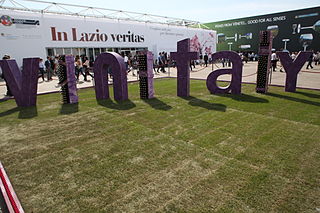
From the 6th until the 9th of April 2014 Verona hosted Vinitaly for the 48th time. This event is not only Italy’s major wine exhibition, but also one of the globe’s most important.
This is the first in a series of articles that will be published on Gourmettino based on my work at Vinitaly in 2014, with the double goal of, on the one hand, involving readers in discovering new aspects of Italian wine by offering impartial insight regarding single wineries & wines, and on the other hand, sharing my personal, qualified experience with them.
It was with great interest and motivation that I returned to Vinitaly this year (I am a veteran of the event by now), to seek confirmation of past experiences and to assess general improvements in what Italian wine can offer; a unique opportunity that only Vinitaly can give to national and international wine professionals.
What is Vinitaly? What does it offer to the wine pro? How this great wine event presents itself to the world?
This year’s Vinitaly, always running jointly with two other exhibitions (Sol&Agrifood, regarding olive oil and food in general, and Enolitech, focused on oenology and viticulture equipment) had the following tags: internationalisation, export, and organic farming.
In four days, Vinitaly attracts to Verona more than 50,000 wine pros from 120 countries, organising specific initiatives promoting incoming attendance, combined with a format that is kept up-to-date with every edition. This year’s innovations regarded internationalisation and organic produce, and were delivered through the following initiatives: Vininternational, International Buyers’ Lounge and Vinitalybio.
Vininternational concerned international (non-Italian) wine production. It brought for the first time international exhibitors under one roof in a single hall, welcoming more than 70 companies from the world’s main producing countries.
The International Buyers’ Lounge, alternatively, was the new area for wine and spirit B2B meetings specifically dedicated to selected international operators attending the show. It had the goal of stimulating business relationships and its Lounge Wine Store hosted “Taste & Buy” workshops. This B2B service, already available since 2006 in regional terms, increased in size and detail in 2014 to reach individual exhibiting companies as a way to meet international import, distribution and restaurant businesses selected by Veronafiere (Vinitaly’s organising body) from main foreign markets and from preferences indicated by exhibitors in a questionnaire called “Customer Satisfaction Vinitaly 2013”.
In 2014, Vinitalybio also made its debut. This specialist exhibition branch was exclusively devoted to certified organic wines. The purpose was to promote bio wine production according to EU standards and regulations, as well as to respond to precise market demand for such wines, particularly from Northern Europe, North America and the Far East. This initiative was set to go on tandem with ViVit, a section of Vinitaly dedicated to winegrowers and terroirs. First held in 2012, prior to ratification of EU regulations concerning organic wine, ViVit initially welcomed not only wines produced by small business but also those made using organic and biodynamic methods that could not be certified at the time. This year, ViVit was able to embrace the many facets of creativity, complexity and diversity in winemaking and rural life, leaving the target of certified organic wines to Vinitalybio, as said above.
In general, small-scale wine world is difficult to catalogue with accuracy. This because it is an expression of individuality and of the personal relationship all producers develop with their terroir. Numbers are thus proportional. For instance, small estates cover only 1.64% of wine-growing surface in Italy, with a yield per hectare of less than 30 quintals of grapes, i.e. less than half the average output, contributing with a mere 0.74% to national wine production. Overall in 2013, 670 thousand hectares produced about 320 thousand hectolitres (source: Servabo – “Natural Wine” 2013). While volume, is lower than average, value of production is higher, thanks to support from consumers seeking and buying such individually crafted wines and to their involvement in sharing those ethical values expressed by producers and their uniqueness. Hence, this production branch is small but generates major interest among trade operators, as evidenced by success ViVit had in previous editions. Attendance by small-scale producers at Vinitaly seeks precisely to “spread the news” and thereby enter classic distribution channels and reach and a broader audience of consumers.
This year ViVit hosted 140 exhibitors, listing several “new entries”. Exhibitors were not only Italian, but came from other countries such as France and Slovenia, not to mention a delegation of twelve producers form Georgia, illustrating their use of clay jars in winemaking. Such jars are called “qvevri” and have a capacity of about 1,000 litres each. In the production process, they are buried and sealed with clay and beeswax, thereby ensuring fermentation of the must and subsequent refinement of the wine in favourable micro-oxygenation and temperature conditions; based on historical winemaking legacy and heritage, furthered since ancient times.
As ever, Sol&Agrifood and Enolitech shows were held simultaneously to Vinitaly. These two events complement the wine expo with excellence from the Italian food sector as well as Italian technology for wine and olive oil production. Together with Vinitaly, they ensure an exclusive international showcase with a strong focus on quality agro-foods: a sector in which Italy exported goods worth 33 billion euros in 2013, of which wine was worth about 5 billions and olive oil 1.3 billions.
Vinitaly is obviously designed to have supply and demand meeting each other. However there is much more than pure business to this important international wine expo. Vinitaly is always a key wine education and cultural opportunity, offering an impressive programme of guided tastings, conventions and presentations of market research and surveys, all very useful in keeping up-to-date with the latest trends shaping the wine world.
We will look in detail at several of such episodes in the upcoming series of articles based on my experience at this year’s Vinitaly. My objective is to involve you, the reader, in pure wine passion and in taking a journey with me; discovering wine stars in that amazing, exciting, dense and diverse wine universe called Vinitaly.
 gourmettino